Friday, July 27, 2012

Parenting Tips: Following the Olympics (Olympics Week)


By: Deborah Pace Rowley
I learned about this activity in a recent issue of Family Fun Magazine. This idea came from Wendi Brandow of Glenville, New York. See a snapshot of the article here:

I knew I wanted to use it to kick off a fun blog week centered around the Olympics. With its unusual sporting events, unique views of the host country, and spotlights on athletes around the world, the Olympics make an irresistible learning experience. To engage your kids in following the Olympics, start by choosing a “home” country for each child. Below are the countries that traditionally win the most medals during the Summer Games so make your selections from these ten countries. You can have your child draw his country out of a bowl or simply choose his favorite from the list: 

China
United States
Russia
Great Britain
Germany
Australia
South Korea
Japan
Italy 
France

Next make a chart that lists the countries that you have selected next to each child’s name. Award coins to that child for each medal that his or her country wins: a quarter for every gold medal, a dime for every silver medal, and a nickel for every bronze medal. You can find the medal count on the internet each night where you can also watch highlights of the different events. Tape the coins to the poster and watch each child’s collection grow. At the end of the Olympics you could remove the coins and use them for a mini Olympic event of your own. Bike to a local burger joint for an ice cream cone, try horseback riding at a local farm or go swimming at a local pool.  Watch the Opening Ceremonies tonight and stay tuned next week for more ways to make the Olympics come alive in your home. 

Pin It

Thursday, July 26, 2012

Elementary Activities: Math Game- Coins Under a Cup


by: Deborah Pace Rowley

The best math students can quickly add and subtract one-digit numbers in their heads. They don’t even have to think to rattle off 7 + 3 = 10 or 8 - 5 = 3. This quick mental calculation is immensely valuable once students start to learn more advanced math concepts such as 2-digit division and 3-digit multiplication. 


Making these calculations automatic doesn’t come naturally. It takes lots of practice. The most fun activity I have found to teach this skill involves 10 pennies and a large lid or wide-mouthed cup. (Make sure that the cup is not glass or clear plastic. That would be cheating!) 
Here is how you play: Lay out the 10 pennies on the table. Have your child turn his heard while you hide a few coins under the cup. When he looks back, he tries to quickly calculate how many coins are hidden by seeing how many coins are on the table. If there are 6 coins on the table- there are 4 coins under the cup. Remove the cup to check your answer. You are right! 
In the beginning, give your child as much time as he needs to come up with the correct answer. Then you can increase the fun and challenge by adding a time element to the game. Count to 10 in your head before picking up the cup. If your child hasn’t guessed the correct number of coins under the cup by the count of 10, you get the same number of points as hidden pennies. If your child has guessed the number of coins correctly, he gets that many points. The person with the most points at the end of the game wins. As your child gets faster, decrease how long you count, from 10 down to 5 then eventually down to 2 or even 1 second. Playing Coins Under a Cup for just a few minutes a few times a week will dramatically improve your child’s recall of these simple math facts. 

Pin It

Wednesday, July 25, 2012

Preschool Activities: Feel Bag

By: Deborah Pace Rowley


Preschoolers are getting more adapt at identifying things by touch alone. Capitalize on this developing skill by creating a feel bag. Any simple draw string bag or even an empty pillow case will do. All you need to do is gather 5 or 6 unique items to place in the bag. Begin with simple objects that your child sees regularly such as a a ball, a marker, a toy car, or a Barbie doll. Have your child reach his hand into the feel bag and try to identify an object without looking at it. If he guesses correctly, he can remove the item from the bag. Continue playing until all the objects have been guessed. 
Increase the challenge by putting less familiar and more similar objects in the feel bag. Can your child feel the difference between an apple and an orange or a pencil and a pen? How about a quarter and a dime? Let your child gather items to put in the feel bag so you can guess. Try to “feel” the color of an object before pulling it out! Now you can tell your preschooler you have “magic hands!”

Pin It

Tuesday, July 24, 2012

Toddler Activities: Texture Box

By Tiffany Rudd

It's rare for any activity to hold a toddlers attention for more than a few minutes, so I was extra excited when this super easy activity had Anniston playing happily for almost 20 minutes!
One of Anniston's favorite books is about animals on the farm and every page has a small section with a piece of fabric to feel. Anniston loves rubbing the different textures. This morning as I was reading this book to her I got to thinking how fun it would be if she could manipulate those textures and be able to feel them better. So, I started gathering. It took just a few minutes of searching to find quite a few different textures. Rough sand paper, soft felt and flannel, a smooth discarded costco card, a bumpy kitchen sponge, etc. I cut/gathered two of each item so we could do some matching together and threw them all in a box.
Anniston was absolutely inthralled with her new texture box. She felt each item, took them each out of the box and put them back in one by one, and even rubbed every item on her cheek saying "Oh" to the soft items and "ouch" to the rough. It was so much fun to watch!
After she had played alone for a little while I sat with her to play along. She rubbed items on my arm or cheek and I helped her label the different textures, I rubbed items on the bottom of her feet to enjoy some giggles, and we worked together to match each item with its pair. Priceless moments spent with my little miss that cost me absolutely nothing. :)
I hope you'll give this activity a try with your toddler or preschooler. No need to buy anything, just look around your craft room (fabric, ribbon, textured paper), bedroom (scraps from old clothing or socks), kitchen (spoons, tin foil, textured food items) and even bathroom (toilet paper, hair brush, curlers). I bet you'll have as much fun as we did! 

Pin It

Monday, July 23, 2012

Meal-time Activities: Time and Space Travel


By: Deborah Pace Rowley


Recently my oldest daughter posed this question to her younger siblings. If you could travel anywhere in space and time where would you go? Who would you want to meet? This daughter is a huge “Dr. Who” fan so I know where this question came from! Tardis, anyone? But I was delighted to hear my kid’s answers. One child wanted to go to Paris in 2012. One child wanted to go back to Jerusalem in 30 A.D. to meet Christ. Other suggestions that we tossed around included visiting China during the Ming Dynasty and attending a ball with Mr. Darcy during the Regency period in England.  Does visiting Hogwarts qualify as traveling through time and space?


Try out this fun question at your next family dinner. The experience will be out of this world! (How was that for a corny ending to this post?)

Pin It

Friday, July 20, 2012

Parenting Tips: A Lot of Smelly Teachable Moments

By Tiffany Rudd

Now that I am enjoying life with 4 children, including a 16 month old and a 1 month, my life includes a lot of diapers. Mountains of diapers...piles, scads, and oodles of diapers! And of course a lot of diaper changes. Tons, gobs, an abundance, and a plethora of diaper changes. Yep, I spend a lot of time wiping bums. One sweet tiny newborn baby bum and one cute chubby toddler bum. The toddler bum is definitely harder to keep in one place long enough wipe. The other day as I was using all my tricks to keep said bum from wiggling away, I realized again what a valuable diaper changing lesson I had learned from my mom.

In case you hadn't figured it out by now, our mom is awesome.

Anyway, early in my diaper changing days, some 2.13 million diapers ago (give or take a few :) she taught me how to use those diaper changes as everyday teachable moments. A few simple question and answer activities and not only will your toddler hold still, she'll even learn something!

So, here are my go-to Diaper Changing Activities:

1. Animal Sounds! This has always been a favorite. All you do is simply ask what different animals say. Right now at our house it sounds like this, "Anniston, what does a {dog, cat, duck, lion, monkey...} say?" At first you will also supply the sounds, but pretty soon your little one will be doing that on her own. There is nothing cuter than a little growl and 10 or so animal sounds later that bum will be clean!

2. Body Parts! For this activity you just ask where different body parts are. "Anniston, where's your {tummy, hair, mouth, nose...}?" Then of course you point to said body part and tickle. Eventually your child will be pointing on her own and laughing before you even begin to tickle. This one makes diaper changing slightly more difficult, but at least you aren't chasing a running naked bum across the room.

3. Who Loves You? This activity also evolves over time. At first I ask "Does {Mommy, Daddy, Grandma, Cameron...} love you?" And then nod and say, "Yes!" Eventually I just ask, "Who loves you?" and enjoy the responses.

These 3 basic activities have gotten me through a lot of bum wiping! And, by the time my two oldest were potty trained they knew a ton of animal sounds, could point to all their basic body parts, and hopefully felt very loved. Totally worth the smell.

Pin It

Thursday, July 19, 2012

Elementary Activities: Summer Star Gazing Guide


by: Deborah Pace Rowley


I love staring up at the stars on summer nights. Something about the stars makes you feel so small and yet so close to heaven at the same time. My kids love to find the Big Dipper and the North Star. I thought it might be fun to try to find some other constellations and learn about the myths behind them. 

I found this great website that gives you a free print out of the night sky as it looks where you live and the constellations that you can look for. 

Here are some pictures of a few of the constellations and the Greek myths behind them. The pictures and text come from this web site: http://www.theoi.com/Cat_Astraioi.html

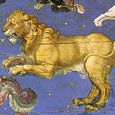
LEO, CONSTELLATION
Latin : Leo (the Lion)
A lion whose hide was impervious to weapons which terrorized the countryside of Nemea. When Hercules was commanded to destroy it as one of his twelve labors, he throttled the beast to death with his bare hands. The lion was then placed by Hera amongst the stars as the constellation Leo. 


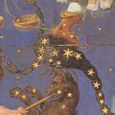
ORION, CONSTELLATION
Latin : Orion
ORION A giant hunter who was set amongst the stars as the constellation Orion. Some say he chased Lepus, the hare, across the heavens with his dog, the constellation Canis, others that he was in pursuit of Taurus the bull. In the story of his death, Orion was either killed by Artemis or by a scorpion sent by Gaea to punish him for boasting that he would slay all the creatures of the earth. The scorpion was also placed amongst the stars and continued to plague him, for as it rose in the east, Orion fled beneath the horizon in the west. You may be able to find the three main stars of Orion’s belt. 


SCORPIO, ZODIAC CONSTELLATION
Latin : Scorpio (the Scorpion)
SCORPION OF ORION A scorpion sent forth by the earth-goddess Gaea to kill Orion when the giant boasted that he would slay all the animals of the earth. The pair were placed amongst the stars as the constellations Scorpio and Orion. The ancients sometimes combined a pair of constellations to create the scorpion, with Libra forming the claws. 

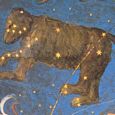
URSA MAJOR, CONSTELLATION
Latin : Ursa Major (the Great Bear)
Callisto was an Arcadian princess who was loved by the god Zeus and transformed into a bear by the wrathful goddess Hera. She was later placed amongst the stars as the constellation Ursa Major, along with her son Arcas, who became Bootes. Hera was still furious and forbade Callisto's stars ever to set in the river Oceanus. 
Pin It

Wednesday, July 18, 2012

Preschool Activities: Choo Choo Train Counting


By: Deborah Pace Rowley


Preschoolers love linking train cars together and pushing them down a track. Here are some printable trains your little engineers can link together to do number sequencing or simple addition. Simply print out the train cars at the link below. They include numbers from 1 to 20 and several math signs including plus, minus and equals. 

Cut out the train cars out and laminate them for added durability. Then place them in front of your child. Preschoolers can link the numbers from 1 to 10 or 1 to 20 in order, creating a really long train on the living room floor. You can also give your child some pieces of cereal to “load” onto their train. Place three pieces of cereal on the Number 3 car, four pieces of cereal on the Number 4 car etc. 

Older children can link trains by adding or subtracting numbers. You can start the train by creating the first part of the equation such as: 2 + 5 = ____.Then you child can finish the train by putting the caboose with the correct answer on the end. You can also leave off the first car or the middle car in the equation for an added challenge. 

Your child can also make as many trains as he can by linking up cars and creating equations on his own. Time your child as he creates a train. Or try to make a really long train by creating an interconnected equation. 1+2=3+4=7+5=13+6=20-12=8+9=17. How long a train can you make? Have fun thinking up new ways to play.

Thanks to Melissa at  melissa.depperfamily.net for the cute train images. 

Pin It

Tuesday, July 17, 2012

Toddler Activities: Follow the Piggy Game with Printables

 By Deborah Pace Rowley


I just love the book Piggies by Don and Audrey Wood. I created some printable piggy finger puppets you can use after you read the book. Cut out  the finger puppets, laminate them, and tape them together.


Then use the finger puppets to play the simple game of Follow the Piggy. Have your child choose his favorite piggy puppet and put it on his pointer finger. You choose another puppet to put on your pointer finger. 

Lead your child through a short narrated story. Have him copy with his puppet the movements that you make with yours. 

Note: These stories were adapted from an early story time presented by children’s librarian Melissa Depper. You can find it here: http://melissa.depperfamily.net/blog/?p=3668. Thanks Melissa!


Follow the Piggy Stories:

*Your piggy is playing Hide and Seek with his piggy friends. The piggy looks up on top of the hill (move the puppets straight up in the air), down in a tunnel (move the puppet straight down), across a bridge (move puppets left to right), and all around town (move the puppets in a large circle in front of your bodies). He “finds” his friends in a silly place, like on top of your head, or in your ear!

*Your piggy is lost on the farm and can’t find his way home. He looks up in a tree, down in a hole, across a log, and around a pond, before finding his way back to his own muddy pig pen. (Make the muddy pig pen by rolling the puppet around in the palm of your other hand.)

*Your piggy goes to play on the playground: he climbs up the slide and slides down, swings across the monkey bars, he goes over the climbing dome, and rides around and around on a merry-go-round.

*Your piggy is running away from the big, bad wolf. He crawls under the straw house because the wolf has blown it all down, he goes around the stick house, he goes on top of the brick house and down into the chimney. He is finally safe from the big bad wolf!

As you tell these stories, make sure to use the directional language words like up, down, across, and around. Knowing directional words is an important pre-writing skill.  Your child will hear their teachers use these words when they are learning how to move their pencils to write their letters! If they already know what these words mean, they can concentrate on making the marks on the page.

Piggy Printables: Here

Pin It

Monday, July 16, 2012

Meal-Time Activities: Adventurous Eaters Dinner

By Tiffany Rudd

Do you have picky eaters at your house? Have a hard time getting you kids to try new foods? If so, this "Adventurous Eaters Dinner" may be able to help.
Last Saturday I mentioned a few times throughout the day how excited I was for our special dinner. "Special plates, special foods, and awesome adventurous appetites!" When dinner time came I asked the kids to help me look through the fridge and pantry for foods we'd like to try. Some of the foods we chose were favorites like chips, carrots and sugar snap peas. We also found some less common foods like raw mushrooms, green and red bell peppers and polish sausage. I made a quick cheese sauce (See recipe below), got out our funky appetizer plates, and set the table for our special dinner.
The first thing we did was discuss the rule for the evening. The one and only adventurous eaters rule was that everyone must TRY one of everything. Being an adventurous eater isn't about loving everything you try, and it definitely isn't about eating everything on your plate, it is just about being willing to try!
I chose fondue for our first adventurous eaters dinner because anything is easier to try covered in cheese. :) It was definitely a success. Both Cameron and Brooklyn gave everything a try and Cameron even tried his least favorite food twice, "Just to make sure he still didn't like it." Next time I think I'll try an assortment of dipping sauces and get even more adventurous in our food selection. I'll let you know how if goes.

Basic Cheese Sauce
1. Melt 1/4 cup butter in a medium saucepan. Add 1/4 cup flour and stir until well blended. Let bubble for just a few minutes.
2. Gradually add 2 cups milk and stir constantly until thickened. 
3. Stir in 1 cup shredded cheddar cheese and heat until cheese is melted and sauce is smooth.

Pin It
Blogging tips